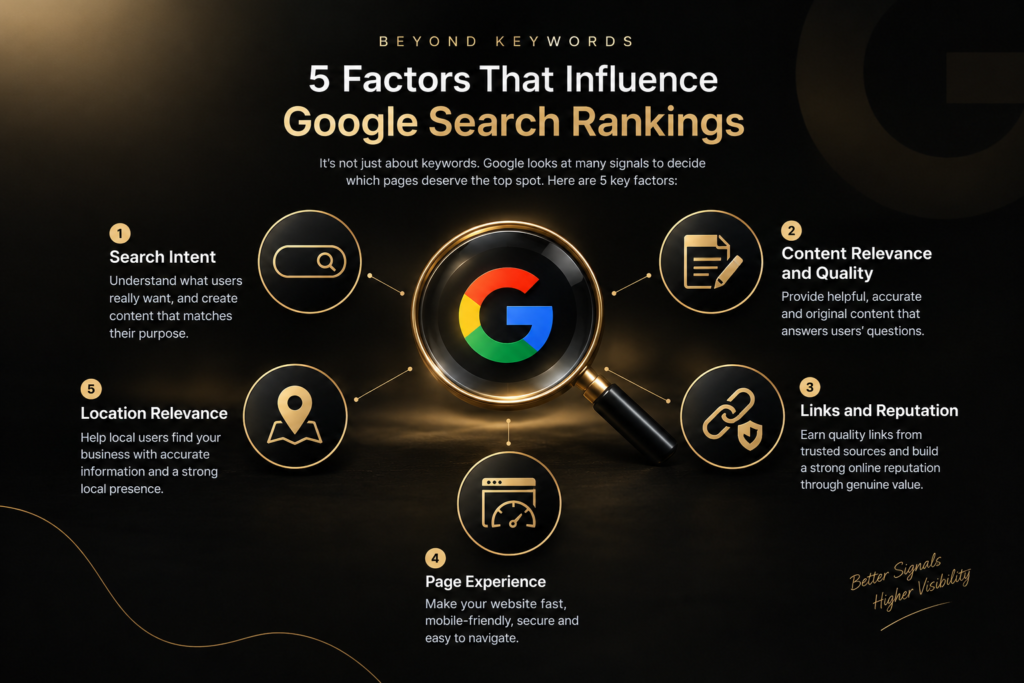
Search Intent: Understanding What Users Really Want
Successful SEO begins with understanding why people search for something. Search intent refers to the purpose behind a user’s query, whether they want to learn something, find a specific website, compare options, or purchase a product or service. When a website provides information that matches this purpose, it creates a more useful experience for visitors. For digital marketers, understanding search intent helps create targeted content that attracts the right audience and answers their actual questions.
Content Relevance and Quality: Creating Value for Readers
Content plays an important role in helping search engines understand what a webpage offers. Relevant, informative, and well-organized content makes it easier for readers to find answers to their questions. Instead of focusing only on keywords, website owners should provide useful explanations, accurate information, and original insights. High-quality content should be written for people first, with keywords included naturally where they fit. The goal is to deliver meaningful information that builds trust and encourages visitors to explore the website further.
Quality Links and Reputation: Building Online Trust
dLinks from other websites can help search engines discover pages and understand their importance. However, the value of a link depends on factors such as its relevance, quality, and context rather than simply the number of links a website receives. A strong online reputation can also develop through useful content, genuine customer reviews, credible mentions, and positive experiences. Digital marketers should focus on earning relevant links naturally by publishing valuable resources and building authentic relationships instead of using manipulative link-building techniques.
Page Experience: Making Websites Easy to Use
A website should offer more than useful information; it should also be easy and comfortable to navigate. Page experience includes factors such as mobile usability, secure browsing through HTTPS, loading performance, and visual stability. Visitors are more likely to stay engaged when pages load efficiently, text is readable, and navigation is simple. Improving these elements can support SEO efforts and create a better experience for potential customers. A well-designed website helps users access information without unnecessary delays or confusion.
Location Relevance: Connecting Businesses with Local Audiences
Location relevance is especially important for businesses that serve customers in specific areas. When people search for services near them, search engines may consider the relevance of the business to the query, the searcher’s location, and the business’s prominence. For example, someone searching for a digital marketer in Kannur may be looking for a professional who understands the local market. Businesses can strengthen their local search presence by maintaining accurate business details, creating location-specific website content, and keeping their Google Business Profile updated where applicable. Local SEO helps businesses become easier to discover among potential customers in their service areas.
Conclusion: Building a Stronger SEO Strategy
Understanding these five factors helps digital marketers develop a more thoughtful approach to search engine optimization. By matching search intent, creating valuable content, earning trustworthy links, improving page experience, and strengthening local relevance, businesses can work toward better visibility and a more useful website. SEO is not about finding shortcuts to the top of search results; it is about consistently providing value to the people searching for it.